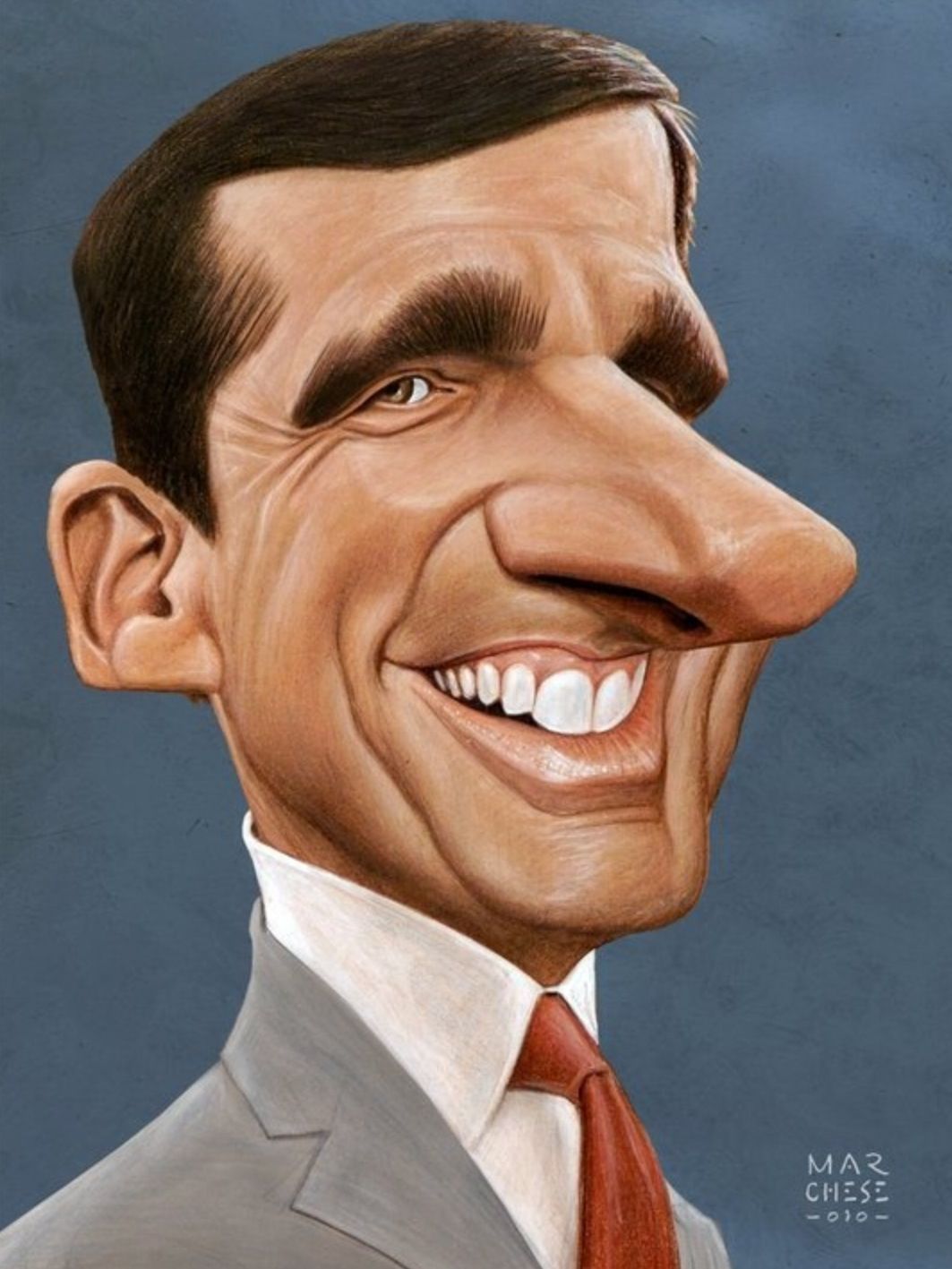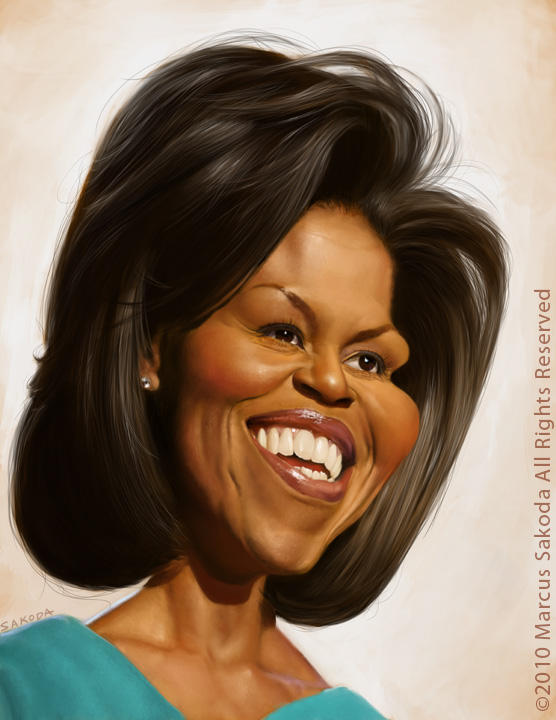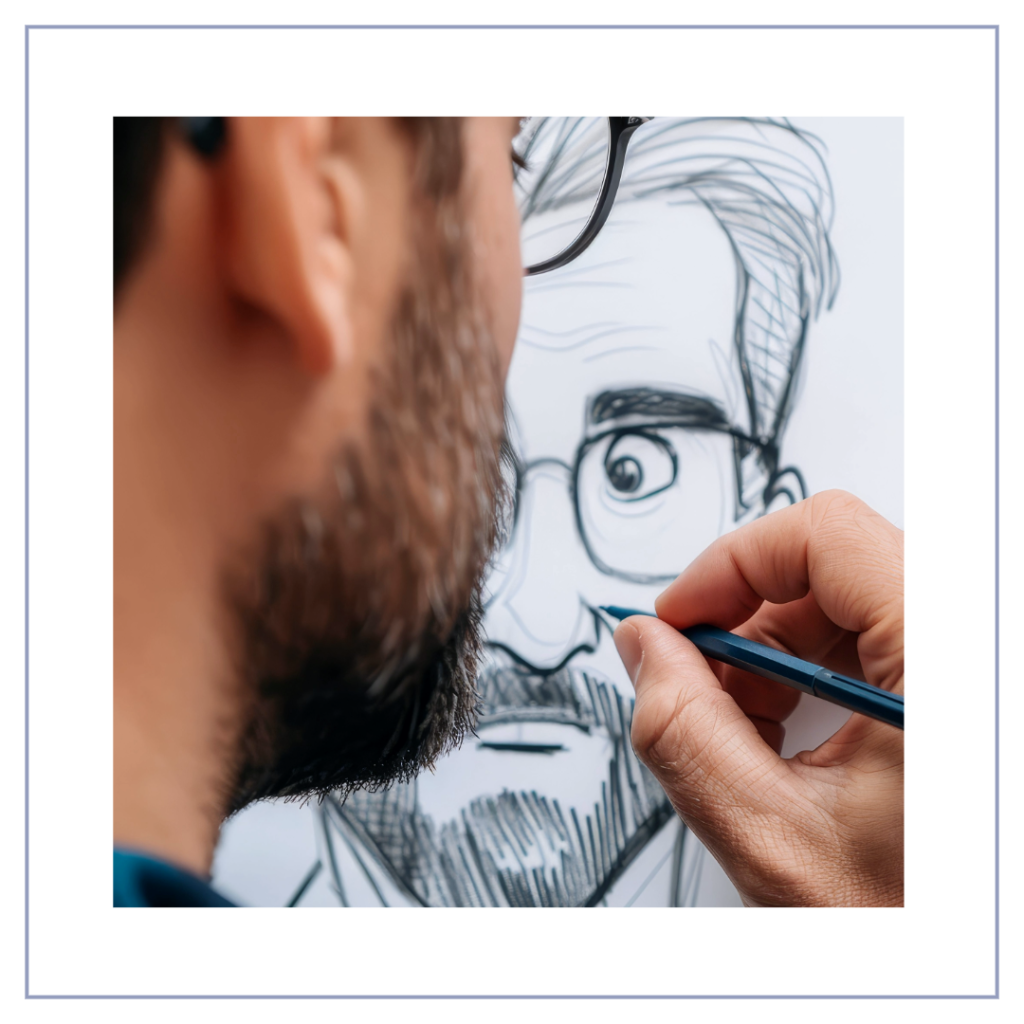
Big hair, long noses, elongated chins…
Amusement parks and carnivals have never really been my thing. Through most of my childhood, rollercoasters terrified me and spinning teacups left me off axis for about a week afterward. Funnel cakes and cotton candy never did it for me because the subsequent sugar coma would have me nearly asleep in my Keds. And no thank you to the duck pond, guess your age or weight, or the unmakeable basketball shot. Who wanted to carry the larger-than-life-sized stuffed panda around in 85 degree heat for five hours anyhow?
Nope, for me, the place of greatest intrigue and amazement had no height requirement or calorie count. It was the caricature artist. I could stand in rapt attention through three or more customer poses, watching how eyes, cheeks, noses and chins were drawn in exaggerated proportion. And in permanent marker, no less; no eraser or CTRL-Z available in case of a mess up. Invariably the customer would laugh in delight upon seeing the finished portrait.
At some point, when I was about twelve, I finally had the $10 needed to sit for my own portrait. The caricature artist asked me some questions about what I liked, and I told him baseball – that I played third base on my local knothole league team. He got to work and produced an awesome drawing of me in uniform, standing third base with a baseball hat on and a smile led by two Chicklet front teeth.
He captioned the caricature “Big Bad Tim”. I was beyond delighted, because neither of those adjectives legitimately applied to me.
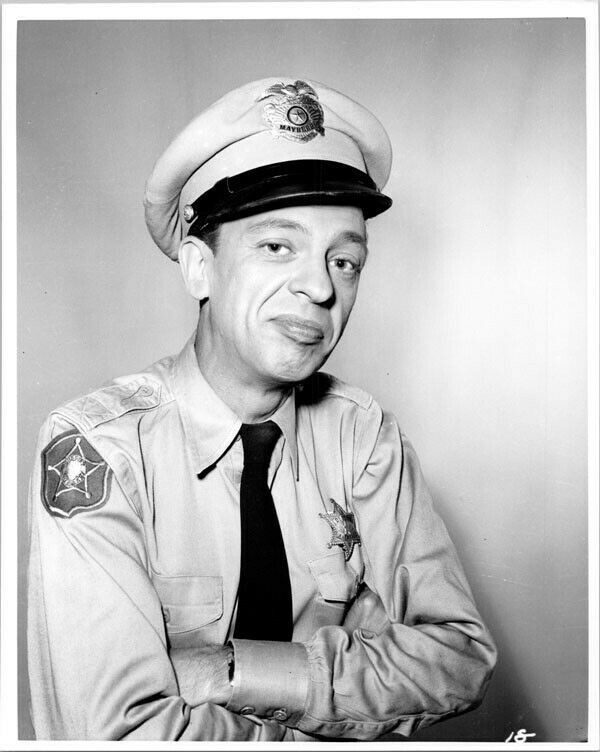
Of course caricatures are not only of the drawn type; they can be of the behavioral type as well. Sitcoms are a fertile field for these, and perhaps no example is more legendary than Barney Fife, the deputy sheriff character that earned Don Knotts five Emmys on The Andy Griffith Show.
When asked how he summoned and sculpted the character of Barney, Knotts replied that he simply engaged in every scene in a manner of a six-year old. Every emotion was hyperbolized, every reaction an over reaction. Sometimes even within a single scene he would soar to the heights of delight and plunge to the depths of despair.
One-bullet Barney was a character..
And he was a caricature.
Switches, dials, balance and blend
One of the fundamental strengths to the Myers-Briggs Type Indicator (MBTI) is its rootedness in human development. While it unbendingly asserts that we come to the world with certain core preferences in place, it more broadly sees people as works in progress. There are certain switch settings that are established from the moment we arrive into life, but from there on our growth is a matter of adjusting the dials of other capacities that are less hardwired. While some of these are more difficult to adjust than others, there is a rooted belief that people have the ability to do so.
In this way, the MBTI is very humanistic in its approach, believing that we are beings of great potential, with the capacity to continue our growth and development through the course of our lives. The process of becoming fully individuated is ongoing and takes people a lifetime as we are challenged to continuously explore behaviors with which we are less adept.
Within my work with Find Your Hum, I place this more deeply within the context of Imago Dei, which is a core Christian tenet that humans are created in the image of God. The MBTI tool provides people the opportunity to deepen their self awareness so that they can more fully understand who the Lord is calling them to be – a unique and cherished creation of His. Hopefully that deepened awareness leads us to be people of better balance, blend and contribution to the world.
84 feet, 10 inches
Framed in this way, the process of self-actualization can therefore be seen as one of refinement. The exaggerations and insufficiencies of youth become offset and supplemented as our character develops. In contrast to the disproportions of caricatures, we become more finely detailed in our description, more blended with our ingredients – kind of like lasagna on the second day.
Part of the process of knowing who we are is coming to a further understanding of who we aren’t. The grace of humility makes this latter realization a contribution to our character, not a withdrawal from it. This realization means that our growth can be purposefully subtractive, not singularly additive, especially when it helps further clarify who the Lord is calling us to be.
Somewhere in a box of memorabilia, now almost 50 years old, is that caricature of me, aka Big Bad Tim. In the interest of full disclosure, I actually did not play third base. I just told the caricature artist that I did. At just under five feet in height and a scrawny 75 pounds, I was not able to field a hot grounder to third and throw it 84 feet and 10 inches across the diamond from third to first. I just wished I was bigger and stronger, and the caricature offered me the opportunity to hyperbolize my capability in keeping with the exaggerated nature of the drawing.
I have kept that drawing, and every so often I find my way back into an episode of The Andy Griffith Show to invariably have a laugh at the antics of Barney Fife. Caricatures call us to give space to absurdity as we look at the world and ourselves.
But in our world that is so surplus with headlines and hyperbole, it is important to remember that caricatures are meant to be amusing, not aspirational. Becoming who we are called to be requires some stretching, but not such that we become exaggerations of our intended selves. Such is the difference between caricature and character – one is about amplification and the other is about authenticity.
The latter is to be our true pursuit, knowing that it will span our lifetime and be a unique narrative guided by who the Lord is calling us to be.